




By: Tracy Pennycuick
One simple rule should be applied to data center development. They should not be forced into communities, placed on every undeveloped or underdeveloped parcel, or advanced in locations where residents have made clear they are not in support. Projects of this magnitude carry significant implications for land use, infrastructure, energy demand, and water resources that must be considered carefully and transparently.
There is broad recognition that data centers are an important part of our modern
economy, smartphones, telehealth, streaming services, cloud-based business tools, online banking, and even email, all rely in some way on data center infrastructure.
However, necessity does not make every location suitable.
Residents deserve confidence that any proposal moving forward has been thoroughly reviewed with the public interest placed above private development pressures. Most importantly, they must be made with full respect and consideration of the residents
who will live in these communities.
One case in particular strikes me as especially egregious: the recently proposed data center development involving the former Publicker Distillery property and previously preserved state game lands in Linfield.
I do not believe the proposed site is appropriate for data center development, especially given its connection to previously preserved state game lands. Land that was previously designated for conservation, recreation, and wildlife habitat should not be converted to support this type of industrial use when other locations, including true brownfield sites, vacant commercial properties, or underutilized buildings, are better suited for redevelopment.
I am especially concerned that these lands were preserved for public use, and supported by revenue generated through hunting license sales, may now be used to facilitate private development. Once land of this character is developed, it is difficult, if not impossible, to restore. For these reasons, I have formally communicated my opposition to the Limerick Township officials on this development.
This issue also underscores the importance of local control. Residents must retain the ability to decide, through their local zoning and land-use process, whether a data center is appropriate for their communities.
In my capacity as Chair of the Senate Communications and Technology Committee, I sponsored an amendment, which has since been adopted, to ensure that state-level action does not undermine those local decision-making powers.
Finally, developments of this size and impact should not be shielded from public scrutiny. I intend to introduce legislation in the Senate to prohibit the use of non-disclosure agreements in connection with data center development. Residents deserve transparency, and they deserve a fair opportunity to understand, evaluate, and be heard on proposals that directly affect their communities.
Public officials at all levels must listen closely to the residents who will be most directly affected by this development. Their concerns are legitimate, and their voices must remain central to this process.
While this is ultimately a local decision, I stand ready to assist in my capacity as your state Senator.
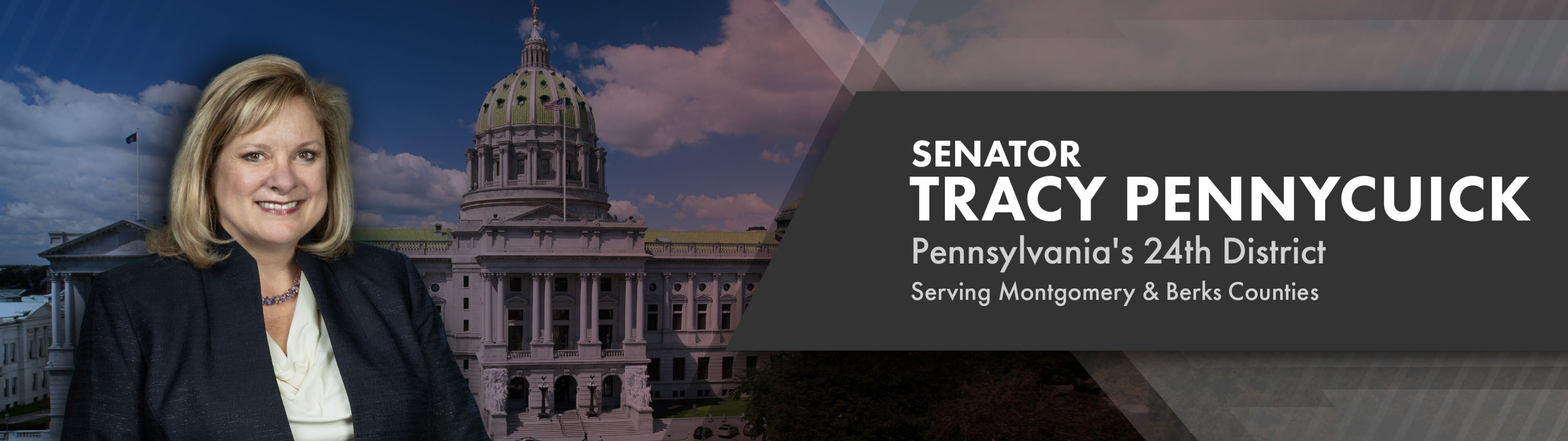
Tracy Pennycuick represents the 24th Pennsylvania senatorial district which includes parts of Berks and Montgomery counties.
CONTACT: Lidia Di Fiore (215) 541-2388